Research
ILI’s objective is to create a partnership with businesses to create opportunities for scholars to research diversity, equity, and inclusion activities in organizations. This research is being published in top academic and practitioner journals. The purpose of the research is to better understand the processes involved in helping and hindering organizations as they attempt to become diverse, fair, and inclusive organizations and develop evidence-based practices to achieve DEI goals.
The following table highlights examples of the areas of research expertise by the world-class ILI faculty.
Scholar: Leanne Atwater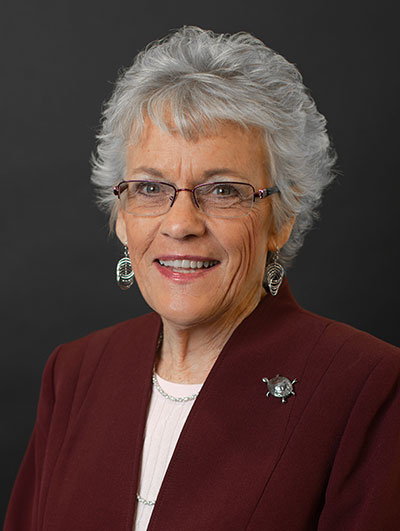
Emeritus Professor of Leadership and Management in the Bauer College of Business Ph.D. Claremont Graduate University Research AreasDr. Atwater’s research deals with a variety of leadership issues including gender, self-awareness and remote work. A sample of this work is highlighted below. She has done work in the area of self-awareness which suggests that women tend to underestimate how their leadership behaviors are viewed by others, particularly by their bosses which can create self-imposed roadblocks to promotion. Concrete steps need to be taken in how we educate and train women to increase their self-awareness (e.g., multi-source feedback processes). She has also written about the #MeToo movement in response to sexual harassment in the workplace. She learned that in general, both men and women understand what sexual harassment is. Unfortunately, her work highlighted the backlash that women experienced as a result of the #MeToo movement. For example, 21% of men and 12% of women said in the wake of #MeToo, they were more reluctant to hire women for jobs that require close interpersonal interactions with men (e.g., traveling) and 27% said they have avoided having meetings with women with no others present. On the positive side, her research into the reactions to #MeToo also revealed that both men and women believe #MeToo is empowering women and that employers are taking allegations of sexual harassment more seriously. Her recent work has enlightened us about the complexities of remote work and the importance of allowing employees autonomy in scheduling their work times and places when possible. |
Scholar: Derek R. Avery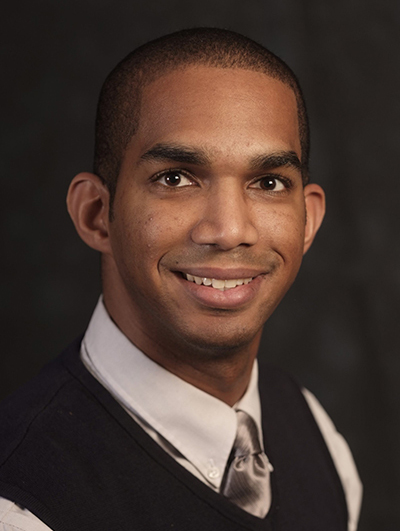
C.T. Bauer Chair of Inclusive Leadership and Professor of the Management & Leadership Department at the Bauer College of Business at the University of Houston. Ph.D. Rice University Research AreasDerek Avery’s primary research interests are in workforce diversity (including, but not limited to racioethnicity, sex, age, experience, religion, and culture) and employee input mechanisms. He examines differences that make a difference in the workplace to individuals, teams, and organizations. He is perhaps best known for his work on diversity climates, which has established them as: (a) instrumental in reducing demographic differences in employee engagement, absenteeism, creativity, turnover, and individual performance and (b) key drivers of unit-level customer satisfaction, sales growth, and financial performance. Most recently, he has focused on clarifying the empirical impact of organizational diversity, equity, and inclusion. His work employs multiple methods across levels of analysis. For instance, he has utilized archival data, experiments, meta-analysis, Monte Carlo simulations, theory development, and qualitative analysis to better understand various organizational phenomena. He also seeks to help facilitate the development of young scholars in the process of conducting his own research. |
Scholar: Sana (Shih-chi) Chiu
Associate Professor of the Management & Leadership Department at the Bauer College of Business at the University of Houston. Ph.D. University of Missouri in Columbia. Research AreasSana Chiu’s research examines how strategic leaders and corporate boards navigate high stakes decisions related to sustainability, stakeholder expectations, and organizational change. Her work sits at the intersection of strategic leadership, corporate governance, and sustainability strategy, with a particular focus on the behavioral and cognitive processes that shape executive decision making and organizational outcomes. A central theme in her research is understanding when firms pursue credible sustainability strategies and how leadership characteristics, governance structures, and stakeholder pressures influence those choices. Her work also explores topics such as stakeholder engagement, executive succession, responsible leadership, and organizational change. More recently, she has examined how leader communication, cognition, and facial characteristics influence investor reactions, ethical judgments, and sustainability performance. Methodologically, she employs a mix of archival data, experiments, meta-analysis, and text analysis to study real world organizational challenges. Her broader goal is to produce rigorous and impactful scholarship that advances theory while informing managerial practice and policy discussions related to long term organizational and societal outcomes. |
Scholar: Lawrence Houston III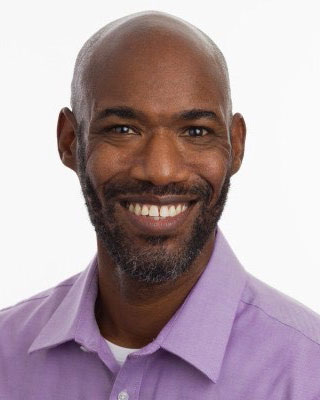
Assistant Professor of Management in the C. T. Bauer College of Business at the University of Houston. Ph.D. Pennsylvania State University Research AreasDr. Houston earned his B.A. in psychology and philosophy from the University of Memphis, and his PhD in Industrial and Organizational Psychology (with a minor in Business Management) from Pennsylvania State University. His primary research interests are: (1) the strategic management of workplace diversity and (2) the dynamics of leader-follower relationships. One major focus of his research has been investigating proactive strategies for building inclusive work environments and managing stigmatized identities (i.e., race, sex, disability, and criminal history) across the employment lifecycle, from job search to organizational socialization. He also studies how leaders influence employees’ discretionary behavior at work, with a particular focus on organizational citizenship behavior and counterproductive work behavior. His publications have appeared in high-impact journals, such as Academy of Management Journal, Journal of Applied Psychology, Journal of Management, Organizational Behavior and Human Decision Processes, Journal of Organizational Behavior, and Group & Organization Management. His work also has been featured in media outlets such as BBC News, NY Post, Miami Herald, The Conversation, Newsweek.com, Wharton Business Radio, CBC Radio, Salon, and Oregon Public Broadcasting (Think Out Loud). |
Scholar: Saleha Khumawala
Professor - Musa and Khaleda Dakri Endowed Chair in Economic Inclusion, Executive Director of the Dakri Center for Economic Inclusion and Founding Director of the SURE℠ Program Ph.D. University of North Carolina at Chapel Hill Research AreasDr. Saleha Khumawala, Professor, holds the Musa and Khaleda Dakri Endowed Chair in Economic Inclusion, is the Founding Director of the SURE℠ (Stimulating Urban Renewal through Entrepreneurship) Program and Executive Director of the Dakri Center for Economic Inclusion at Bauer College of Business, University of Houston. She teaches and does research in the fields of Government and Non-Profit Accounting and Social Entrepreneurship. She has published widely, made numerous presentations at national and international conferences and is an active member in several academic & professional organizations. She is also the coauthor of Government and Not-for-Profit Accounting: Concepts and Practices, 10th edition, and coauthor of Governmental Accounting, Bloomberg’s Tax & Accounting Policy & Portfolio Series. Dr. Khumawala’s vision gave birth to the SURE Program, an innovative experiential educational model that creates a unique ecosystem by partnering UH students, aspiring local entrepreneurs, and executive business leaders for a singular educational experience and unmatched community impact. It develops an entrepreneurial mindset and the human centric skills our students need for the future of work in an AI world, and uplifts the community (a huge societal impact), all within the confines of a classroom. To-date, the Program has trained 600+ students in human-centric skills, educated 2,300 + aspiring local entrepreneurs and launched or materially expanded over 1,400 businesses in Houston, with 70 Percent owned by women and an economic impact of $501,091,000. The SURE℠ Program and Dr. Khumawala have received numerous awards and accolades including the Piper Professor 2018 award, the enduring life-time achievement award from the GNP section of the American Accounting Association in 2021, the Inspiring Programs in Business award in 2023, the Excellence in Pedagogical Innovation award from USASBE in 2024, and in 2026 the Global Impact Award for Societal Impact from the AACSB and Community Leadership Award from the Houston Business Journal. |
Scholar: Juan M. Madera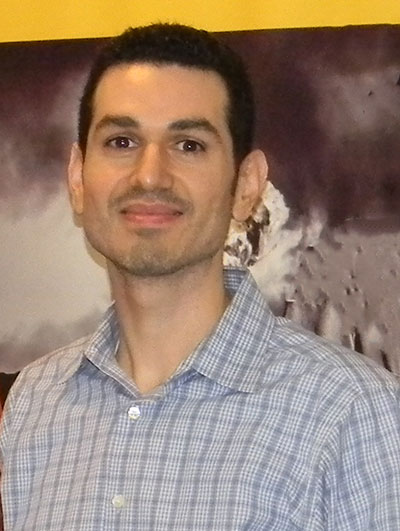
Professor of the Management & Leadership Department at the Bauer College of Business at the University of Houston. Ph.D. Rice University. Research AreasJuan M. Madera’s research examines diversity, discrimination, and workplace mistreatment, with a particular focus on how organizational practices, human resource systems, and interpersonal experiences shape employee attitudes and outcomes. His work integrates perspectives from industrial-organizational psychology, human resource management, and hospitality, addressing questions that are both theoretically important and practically consequential for organizations. A central theme in his research is understanding how workplace contexts can either reinforce or reduce inequity. His scholarship has explored how corporate diversity management messages influence the attitudes of employees and job applicants, how discrimination manifests in HR practices and is perceived by employees, and how individuals respond to workplace sexual harassment in customer-service settings. More broadly, his work contributes to conversations about fairness, inclusion, and the design of healthier and more equitable workplaces. His methodological approaches include the use of time-lagged surveys, experiments, archival data, and qualitative methods. Madera has authored more than 100 peer-reviewed journal articles and has received support from major funding agencies and foundations, including the NSF, USDA-NIFA, the Sloan Foundation, and the Ford Foundation. |
Scholar: Dr. Chet Miller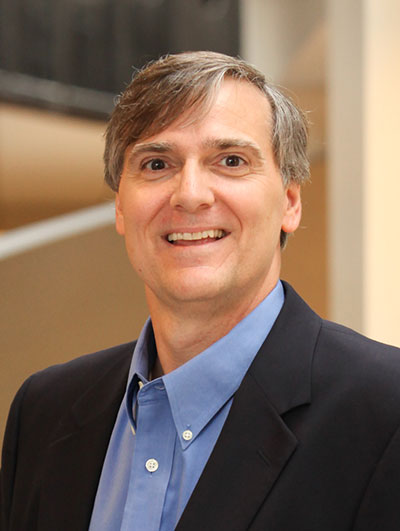
C. T. Bauer Professor of Organizational Studies at the University of Houston. Ph.D. University of Texas in Austin, Texas. Research AreasHis research interest includes diversity and discrimination in the workplace. He has authored more than 80 peer-reviewed journal articles, trade articles and book chapters. Has extensive work in the cognitive diversity of the strategic apex, which focuses on diversity of perspectives and ideas about goals, strategies, task ideas, and task processes. He developed a valid and reliable direct measure of cognitive diversity which is widely used in the field. His publications in the area include: Miller, C. C., Burke, L. M., & Glick, W. H. (1998). Cognitive diversity among upper‐echelon executives: implications for strategic decision processes. Strategic Management Journal, 19(1), 39-58. Glick, W. H., Miller, C. C., & Huber, G. P. (1993). The impact of upper-echelon diversity on organizational performance. Organizational change and redesign: Ideas and insights for improving performance, 176, 214. Samba, C., Van Knippenberg, D., & Miller, C. C. (2018). The impact of strategic dissent on organizational outcomes: A meta‐analytic integration. Strategic Management Journal, 39(2), 379-402. Dr. Miller is currently leading a team of colleagues at Bauer (Dr. Avery, Dr. Chiu, Dr. Wesley, and Dr. Vera) in a comprehensive review of the upper echelon's cognitive diversity literature, asking the question: "Do different perspectives and ideas among senior leaders really make a difference?" |
Scholar: Enrica N. Ruggs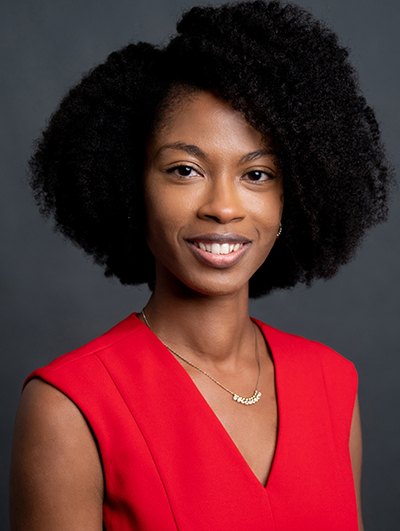
Associate Professor of Management in the Bauer College of Business at the University of Houston. She received her Ph.D. in Psychology from Rice University Research AreasMuch of her published research has examined the manifestation of subtle forms of discrimination toward individuals with stigma characteristics in workplace settings. I also examine strategies people use to manage their stigmatized identities at work and the effects of these strategies on worker outcomes. This work has shown that acknowledging visible stigmas can lead to positive evaluations from others for some identities (e.g., visible disabilities; Lyons et al., 2018), but perhaps not others (e.g., racial identity; Ruggs et al., 2019). However, acknowledging marginalized identities and behaving in ways that are authentic to this identity has positive benefits for the stigma bearer (e.g., Ruggs et al., 2019; Martinez et al; 2017). |
Scholar: Alan Witt
Professor of Management & Leadership in the Bauer College of Business, of Public Policy in the Hobby School of Public Affairs, and of Psychology in the College of Liberal Arts and Social Sciences. Ph.D. Tulane University. Research AreasFormerly a human resources director in the financial services sector, Alan Witt focuses on strategy-cultural alignment. That is, how can leaders shape the work culture so that employee values, priorities, and behavioral norms enable successful implementation of the organization's strategy? His work focuses on work climate (i.e., leadership, organizational politics, job attitudes/engagement, well-being, and hostile/toxic work environments) and employee behavior (i.e., teams, personality, job performance, customer service, counterproductive work behavior, and emotional intelligence/social effectiveness). |
Scholar: Daniel Zyung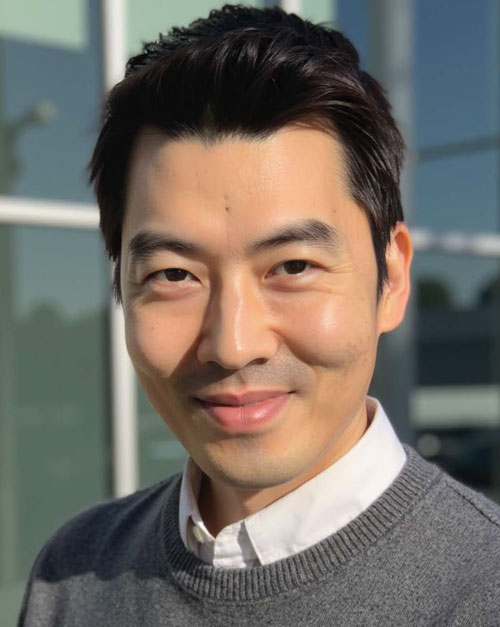
Associate Professor of the Management & Leadership Department at the Bauer College of Business at the University of Houston. Ph.D. Rice University. Research AreasDr. Zyung’s research spans three interrelated areas: corporate leadership, corporate governance, and the behavior of non-executive stakeholders. Across these areas, his research brings psychological and behavioral realism to questions about corporate leadership and its consequences. His primary stream of research on strategic leadership examines how executive characteristics influence firm behavior, including studies of CEO career variety, overconfidence stemming from historical pay comparisons, and how CEO agency-communion orientations affect boards’ dismissal decisions following stakeholder-rights breaches. Ongoing projects extend this work to less-studied dimensions of executive psychology such as paranoia, cognitive complexity, ideology, and orientations toward artificial intelligence. Related to this stream is his work on corporate governance, where he investigates the mechanisms that constrain and sanction executive behavior, including managerial responses to shareholder power, executive compensation, CEO dismissal, managerial misconduct, and the spillover effects of peer litigation and regulatory sanctions. His third stream of research examines how stakeholders—employees, consumers, and online constituents—perceive and respond to firms, with published work on difficult decision making in healthcare, consumers’ political identity and financial risk-taking, and stakeholder engagement with organizations amid polarization. |